

Pupal Fluid
holo- (Michaela Cagáňová & Kamila Valešová)
Solo Exhibition by holo- (Michaela Cagáňová & Kamila Valešová)
Curators: Petra Sedlák Housková, Krisztián Gábor Török
Exhibition duration: September 27 – November 29, 2026
Collaboration: MODEM (HU) & Šopa Gallery (SK)
Address: MODEM Center for Modern and Contemporary Art, Hunyadi János u. 1-3., 4026 Debrecen, Hungary
What happens to living matter between what it was and what it will become?
The title of Pupal Fluid refers to the hidden moment of radical metamorphosis: the biological stage that takes place inside the pupa (histolysis), during which much of the larval tissue is broken down and reorganised as the adult body develops.This phase of absolute fluidity, of the temporary loss of fixed form, becomes the metaphor through which the exhibition steps outside the conventional anthropocentric frame and opens space for rethinking our relationship to the more-than-human world.
holo- — the collaborative practice of designer Kamila Valešová and transdisciplinary glass artist Michaela Cagáňová — work across installation, glass, olfaction, publication and performance. Their projects often develop through long-term field research and dialogue with specialists from scientific fields. An ongoing concern in their practice is how non-human life might be approached through forms of perception and storytelling that do not automatically place the human at the centre.
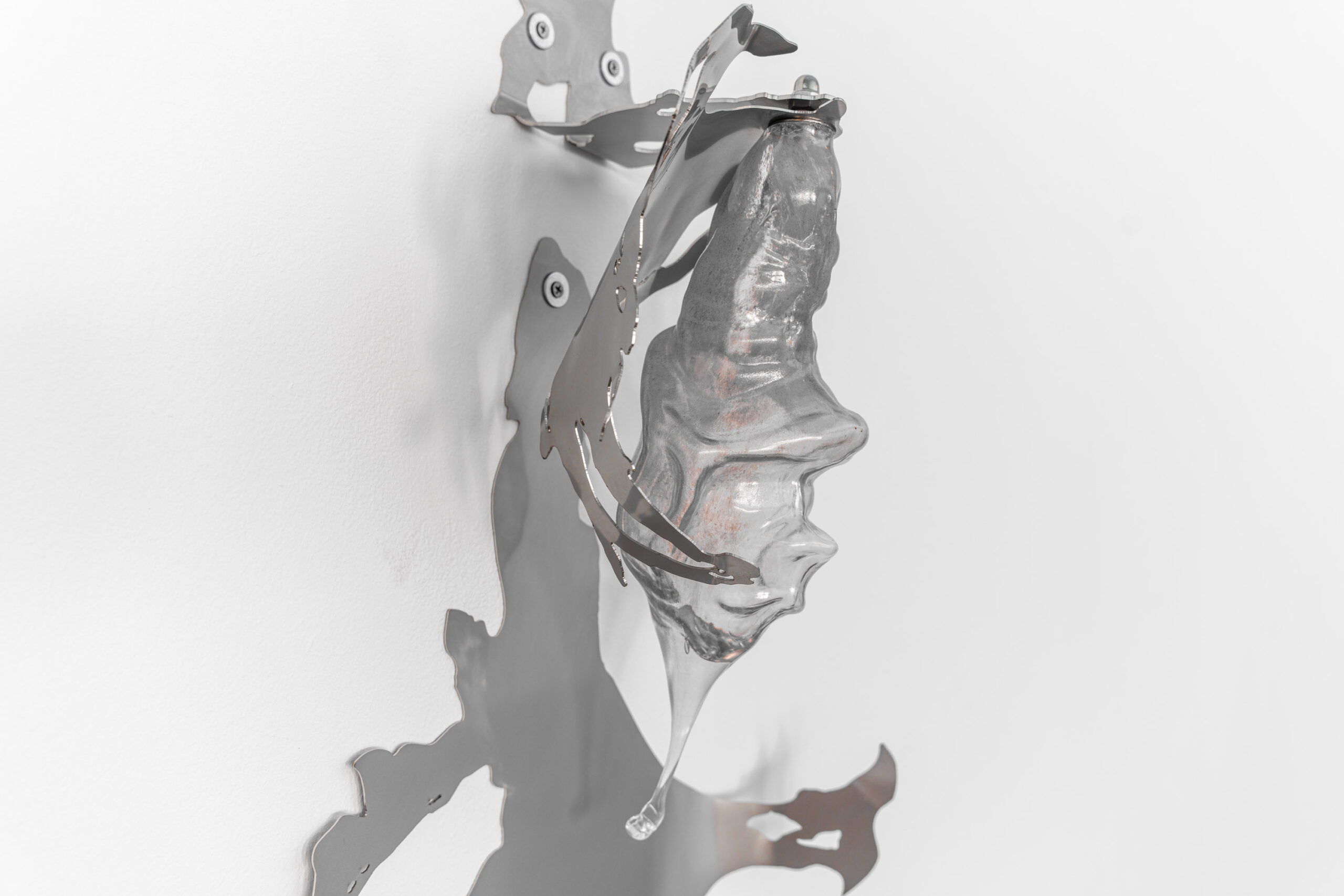
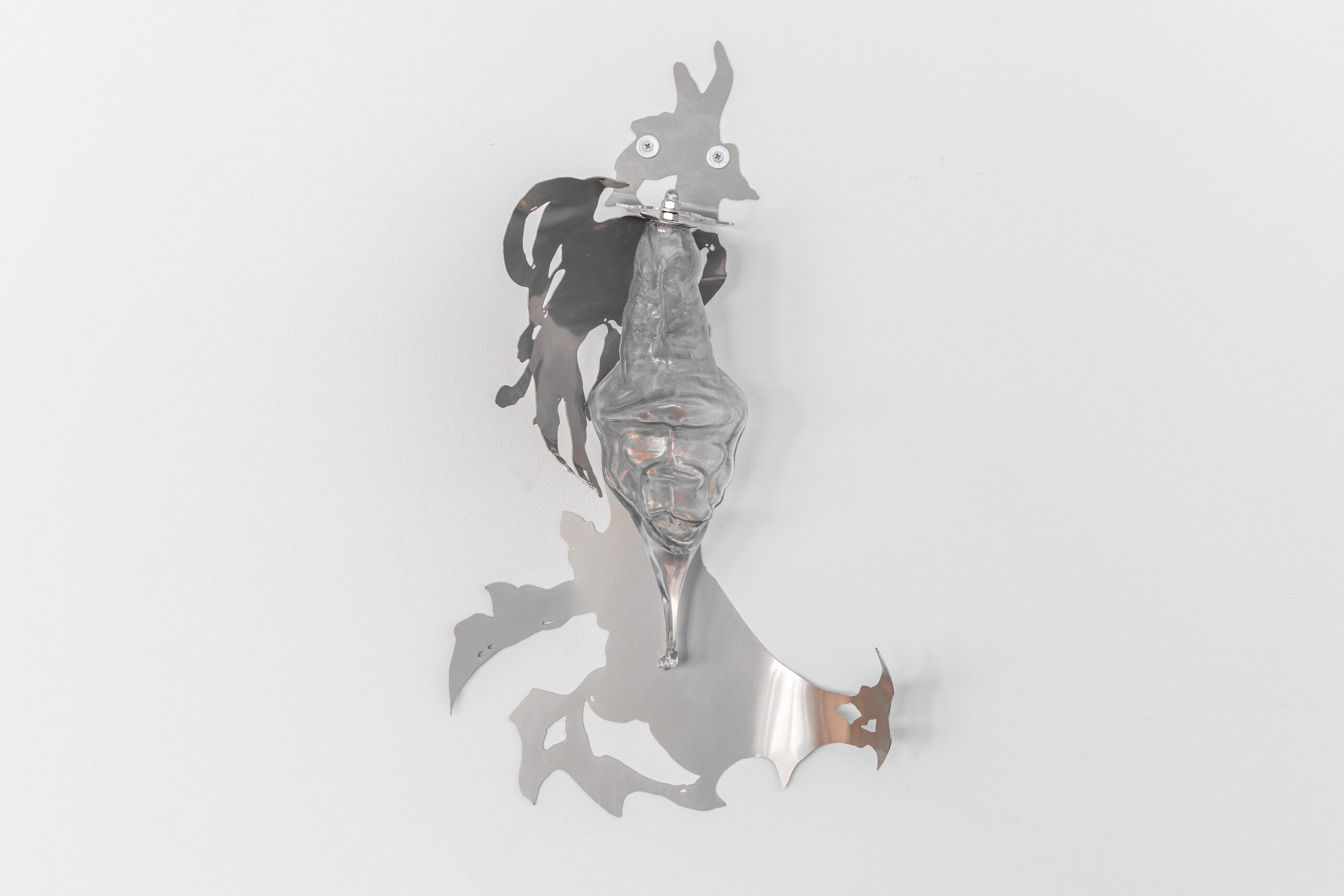
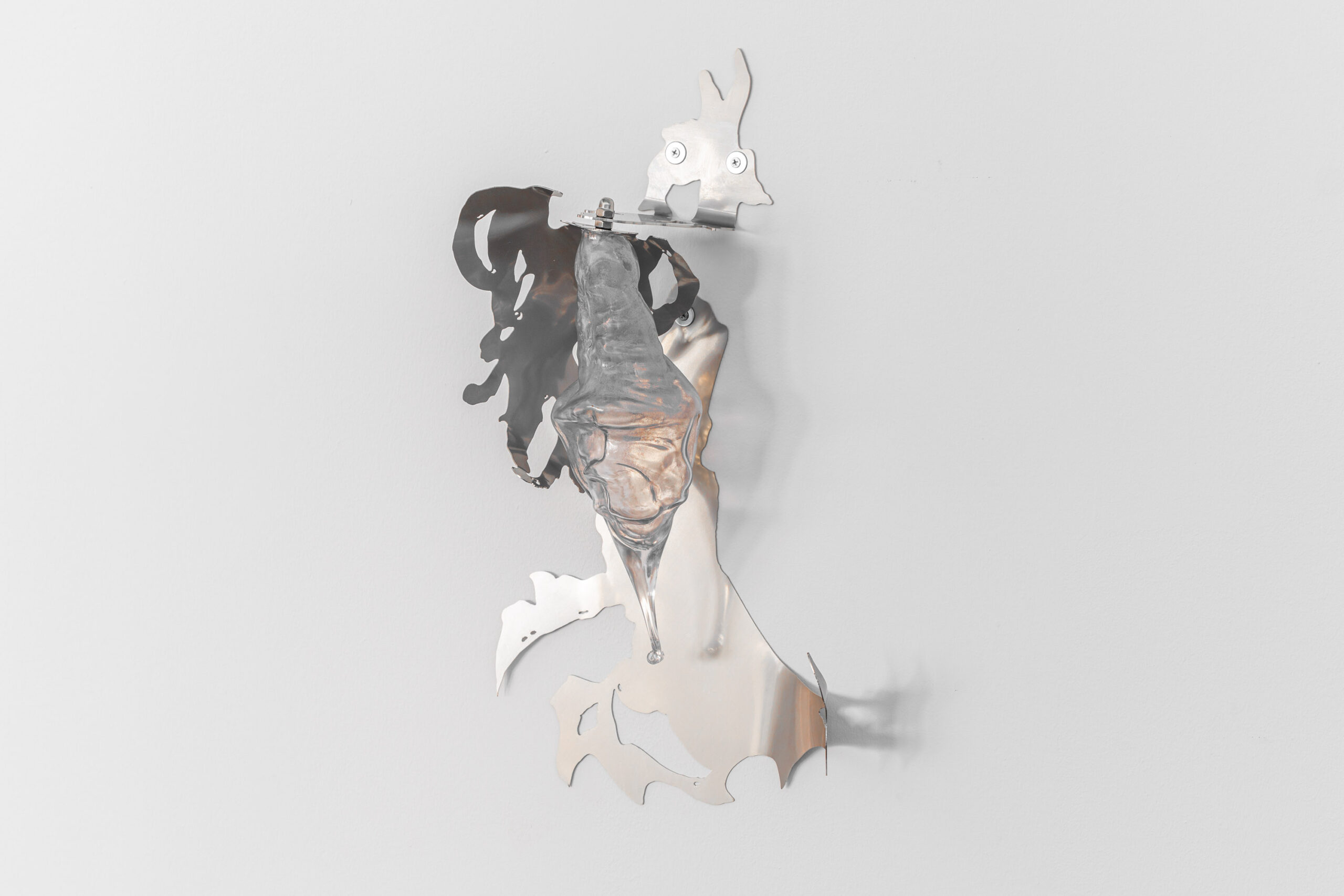
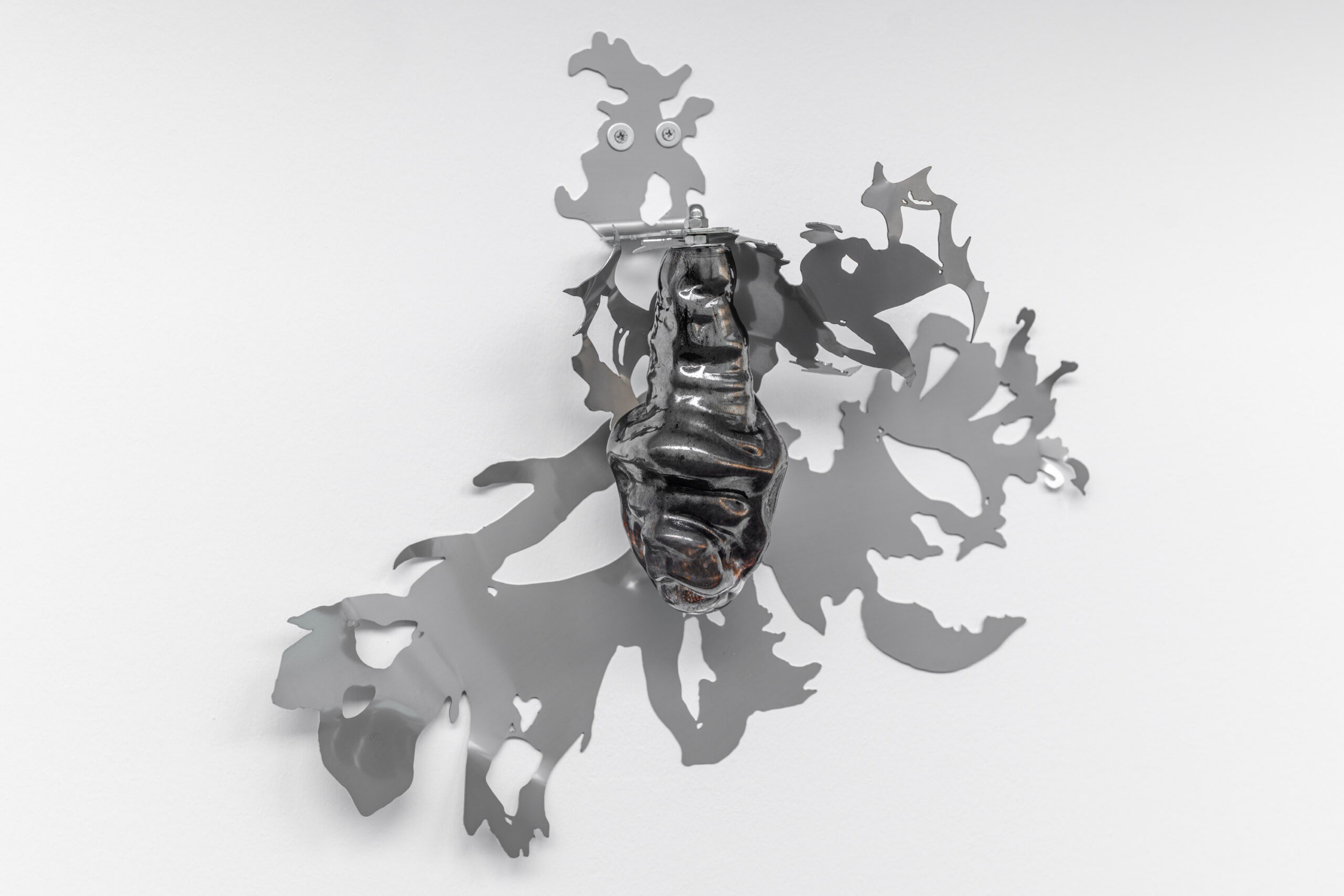
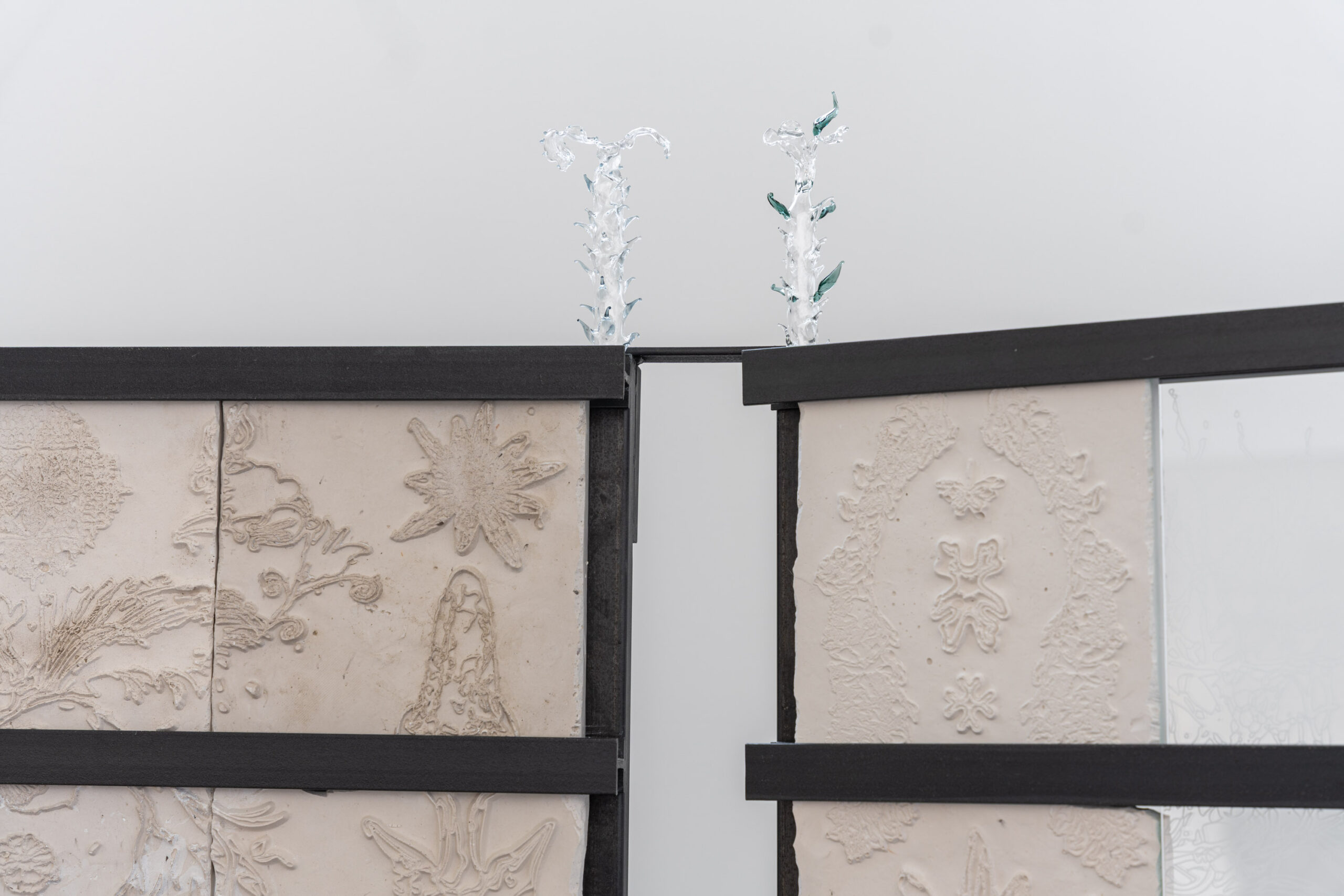
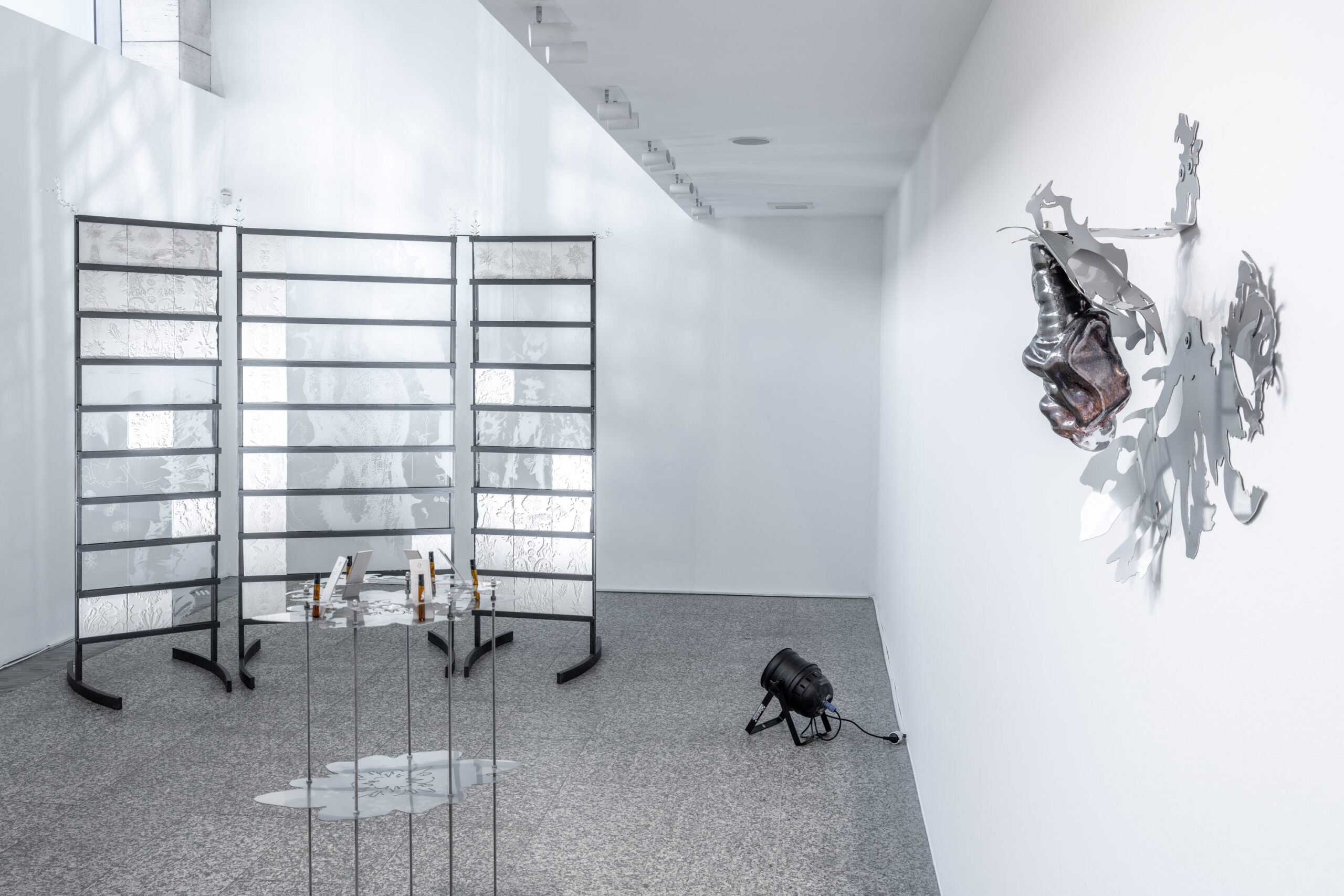
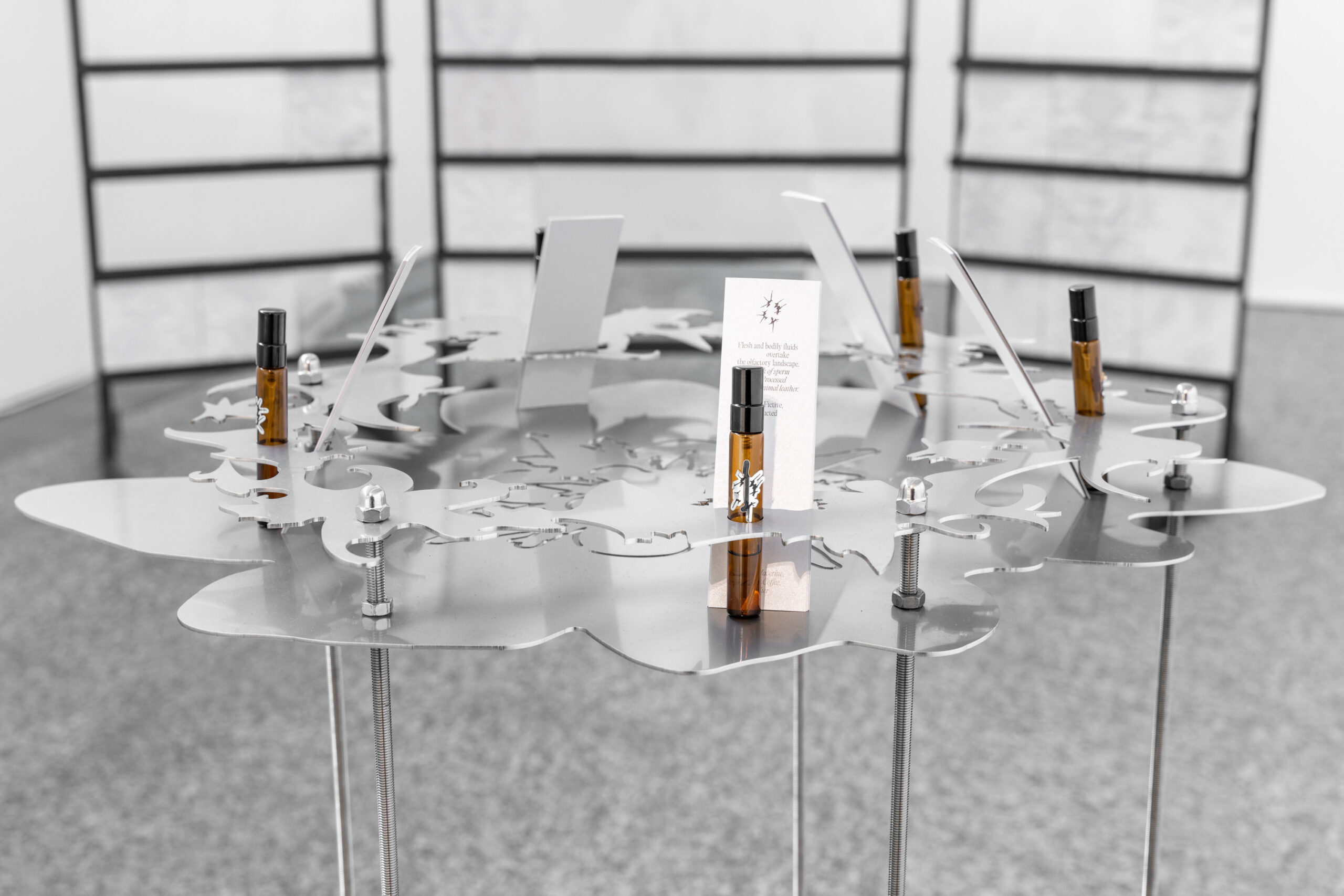
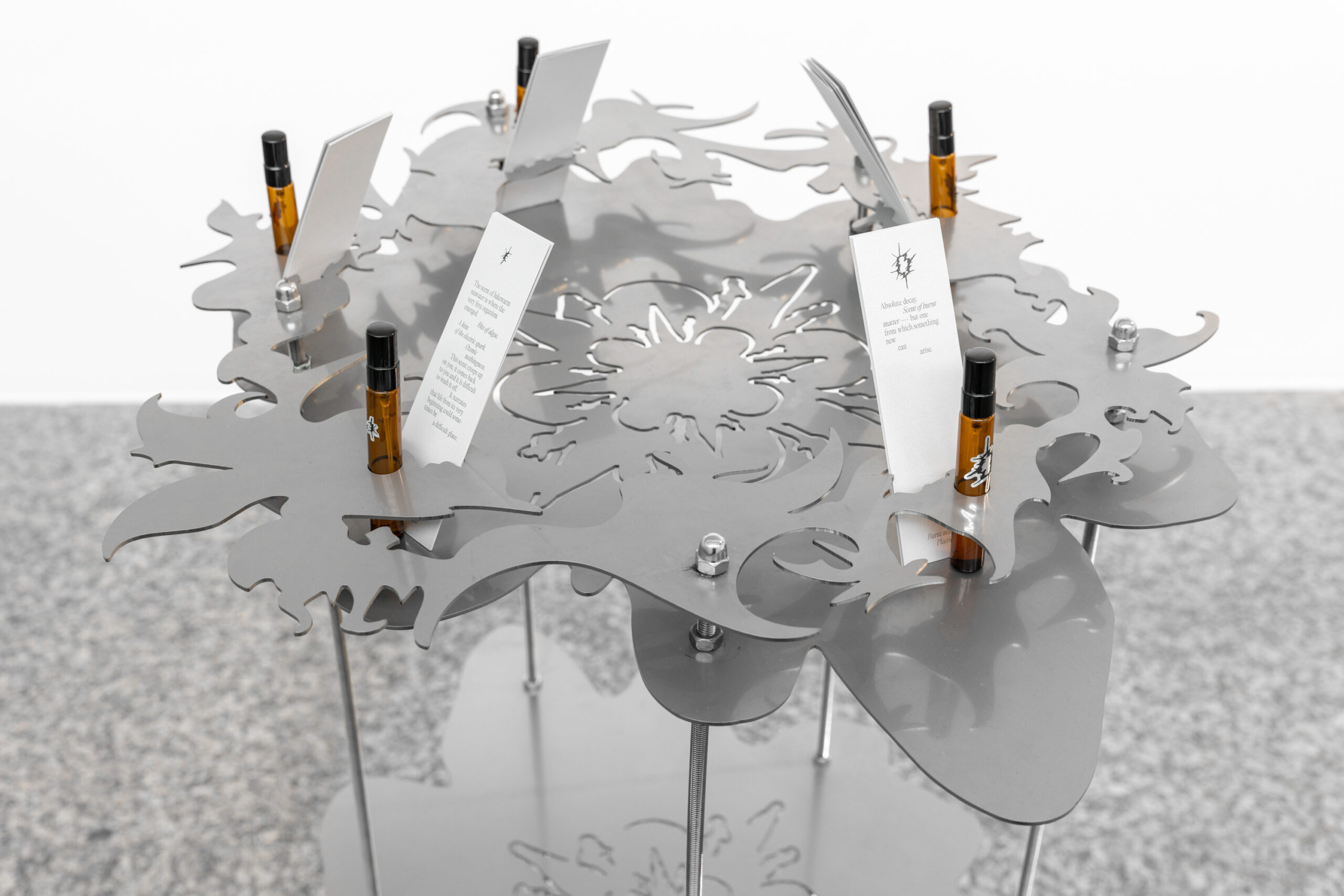
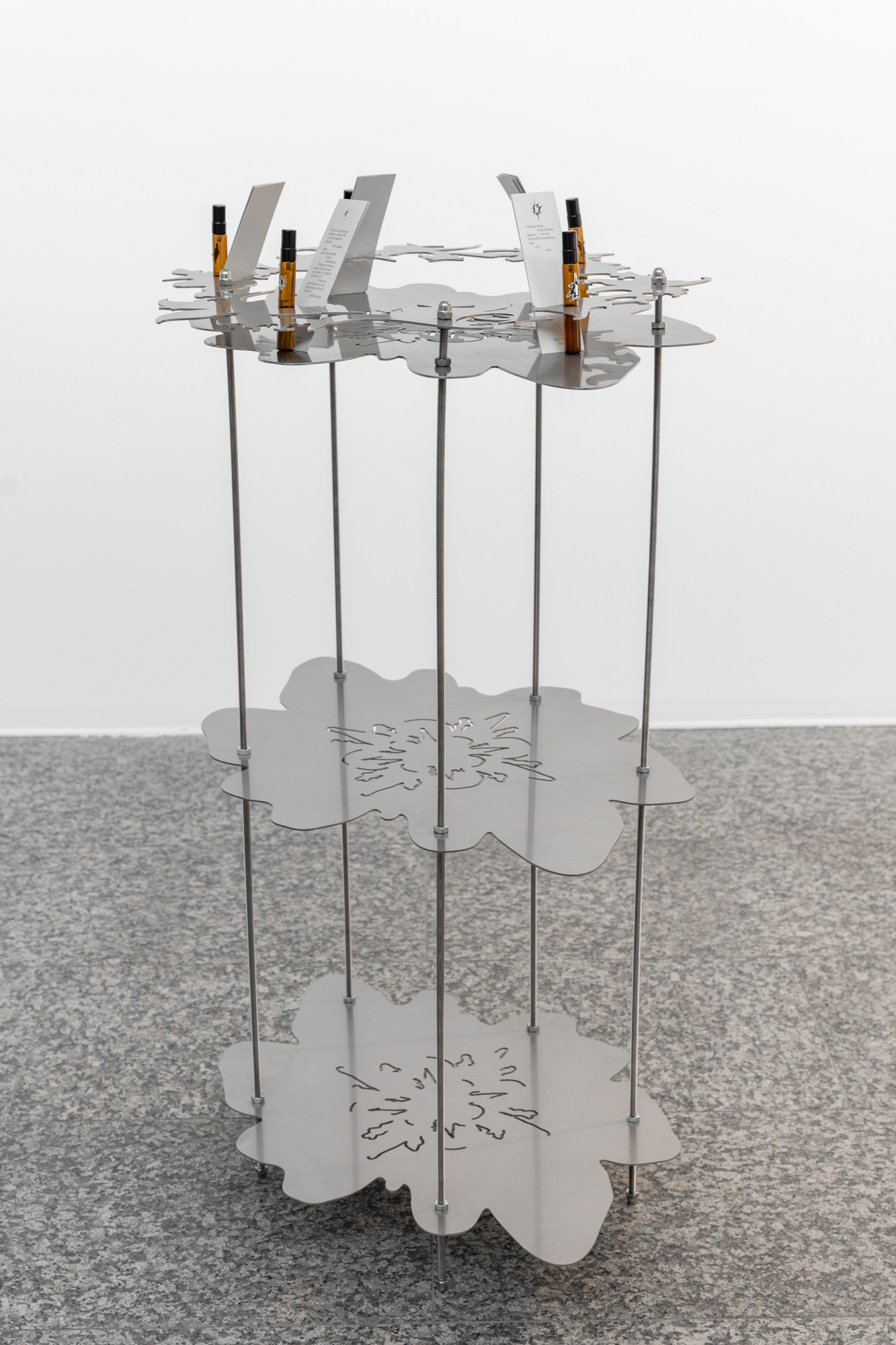
MODEM’s Project Space is transformed by Autochora, an installation composed of an altar, five custom-made scents, a performative censer and glass cocoons. At its centre stands an altar where, in place of anthropomorphic deities, microorganisms, insects and plant forms occupy the focus in the complexity of their abilities, relationships and interconnectedness. The altar is a hypothesis: a teaching that requires no human language.
Such a view presupposes a deliberate turn away from sight as the primary instrument of controlling and categorising the world. The shared medium of communication becomes smell instead, an olfactory tool of cognition that operates through bodily memory and association rather than language alone. A cycle of five scents unfolds the story of the planet, from the emergence of the first organism to the decay of all living things.
The first scent is lukewarm seawater, algae, sulphur, and an ozonic spark. The environment in which the first organism appears. The second accompanies the passage from sea to land: moss, fungi and roots, the first blades of grass and the mycelial connections beneath the surface. The third is the scent of flourishing, the fragrance of nectar and petals, in which plant reproduction reveals itself as openly erotic. The fourth belongs to the human: the smell of flesh and bodily fluids, of processed leather and coffee, a fabricated supremacy sustained by power. The fifth is the scent of decay, of burnt matter and plastic. A seemingly definitive ending, out of which something new may still be born.
The scents do not function as illustrative scenery. Their molecules physically enter the body; the boundary between subject and object is therefore not blurred metaphorically, but literally.
This use of scent continues a longer line of enquiry in holo- ‘s practice. The artists have been building an olfactory archive by collecting, extracting and composing unconventional scents, asking what kinds of stories might be told through smell rather than primarily through images or text.
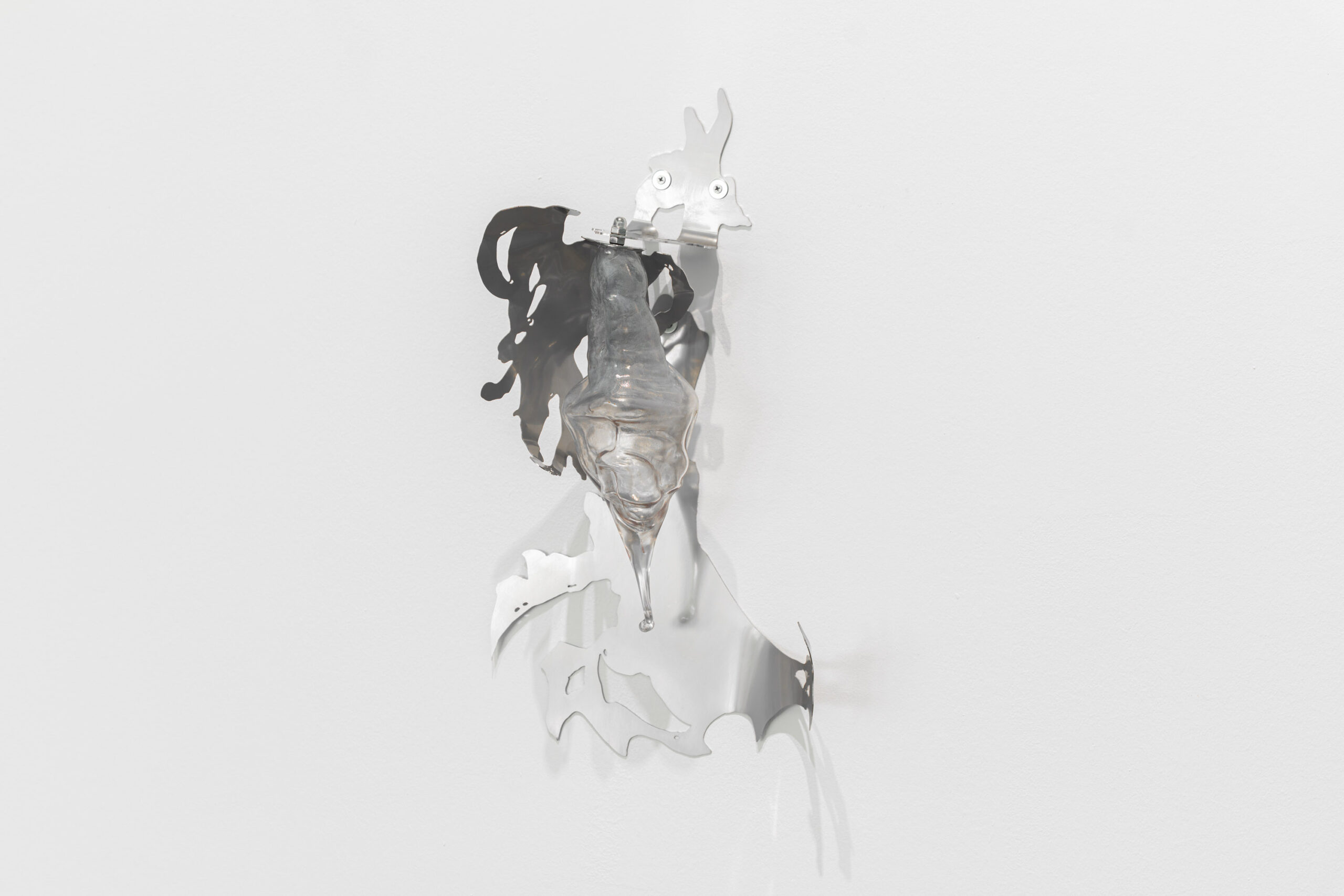
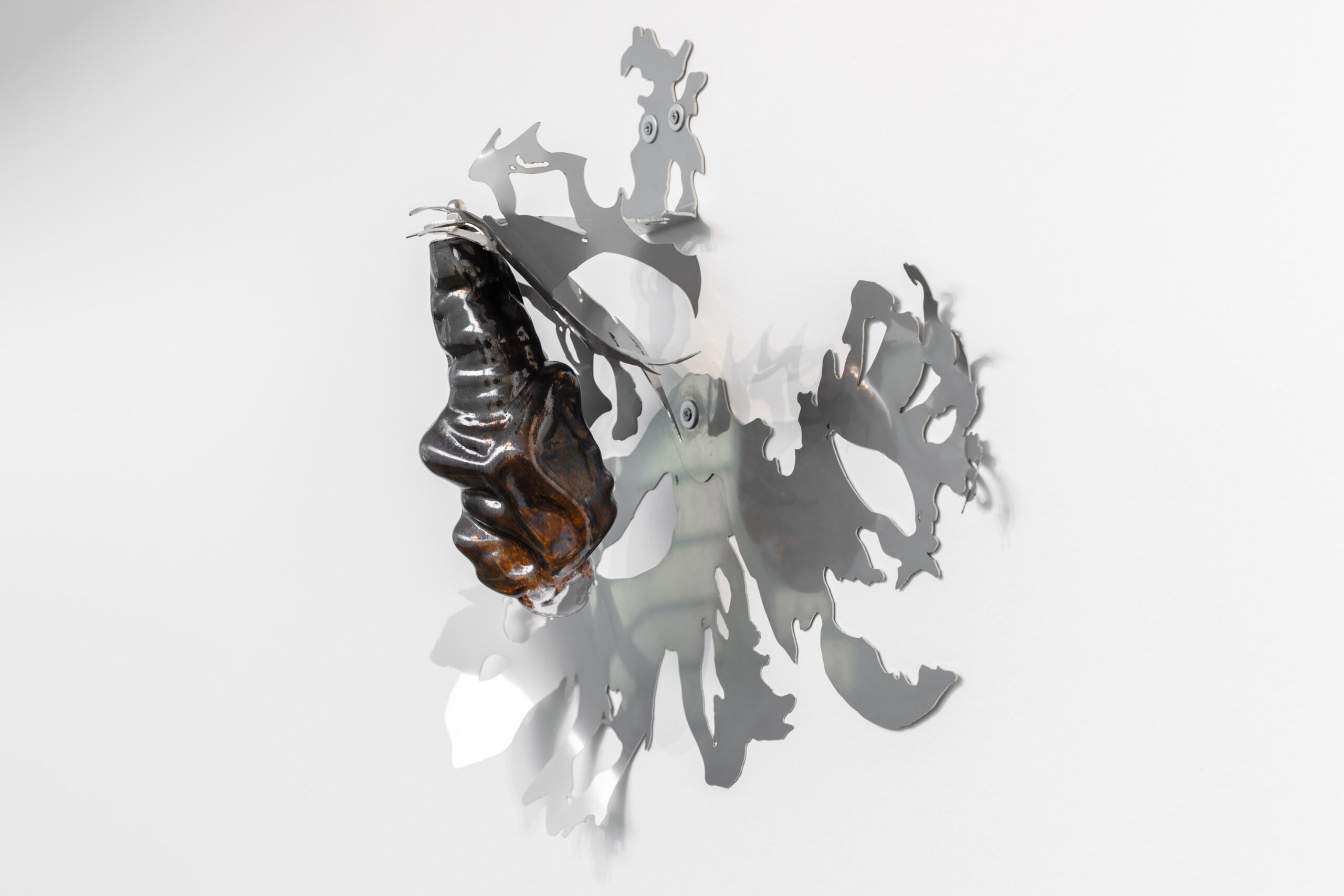
Fragile glass pupae materially complete this zone of transformation. Glass, shaped while molten and fixed through cooling, underscores the instability of the whole process. It is also a recurring material in holo-’s practice, where it functions as a carrier for scent and as a material whose form is partly determined by heat, gravity and its own unpredictable behaviour.
The pupa is not a container of transformation but the transformation itself, a body that has lost its previous shape and has not yet acquired a new one. Its transparency reveals nothing. We see the casing and its distorted shape, but not what is taking place within. We do not know whether the process will be completed, nor what will finally emerge from the dissolved matter.
Pupal Fluid does not place the viewer in the role of an external observer; through sensory experience, it situates them directly inside this delicate state. It shows that the end of a familiar form is not a guaranteed rebirth, but a fragile stage in which decay conditions what comes next, but never guarantees it.