

Lorena Solís Bravo & Beáta Kolbašovská
Counterflow
Exhibition opening: 24. 11. 2025 / 18.00 hod. Exhibition's duration: 25. 11. - 31. 12. 2025 Exhibition's curator: Petra Housková
In the abandoned mines of eastern Slovakia, echoes of pickaxes resonate. Acid mine drainage seeps into rivers, and heavy metals migrate through soil at an invisible pace. Beneath the surface, slow violence* unfolds – invisible yet persistent – a chronic wound inscribed into the body of the landscape and its inhabitants.
Lorena Solís Bravo and Beáta Kolbašovská transform this invisible toxicity into the audible. Using hydrophones, geophones, and binaural microphones, they capture sonic realities beyond human perception – the movement of molecules in contaminated waters, vibrations of seeping contamination, the resonance of abandoned mine shafts. Sonification is not merely an aesthetic gesture; it is an attempt to know the world through the frequencies of the invisible, to listen where we cannot see.
Contaminated water carries within it a history of violent transformation. Slavic mythologies once viewed water bodies as living entities that required respect and reciprocity. Industrialization overturned this relationship – water became a resource, a tool for extraction, the landscape a commodity. Healing this landscape demands a different approach – not technical repair, but the restoration of a relationship. The artists find a solution in phytoremediation – the capacity of specific plants to absorb toxic substances. These organisms become key to a new understanding of remediation, not as a technocentric process but as a symbiotic act of care. Phytoremedial plants materialize a biological form of care based not on domination but on collaboration.
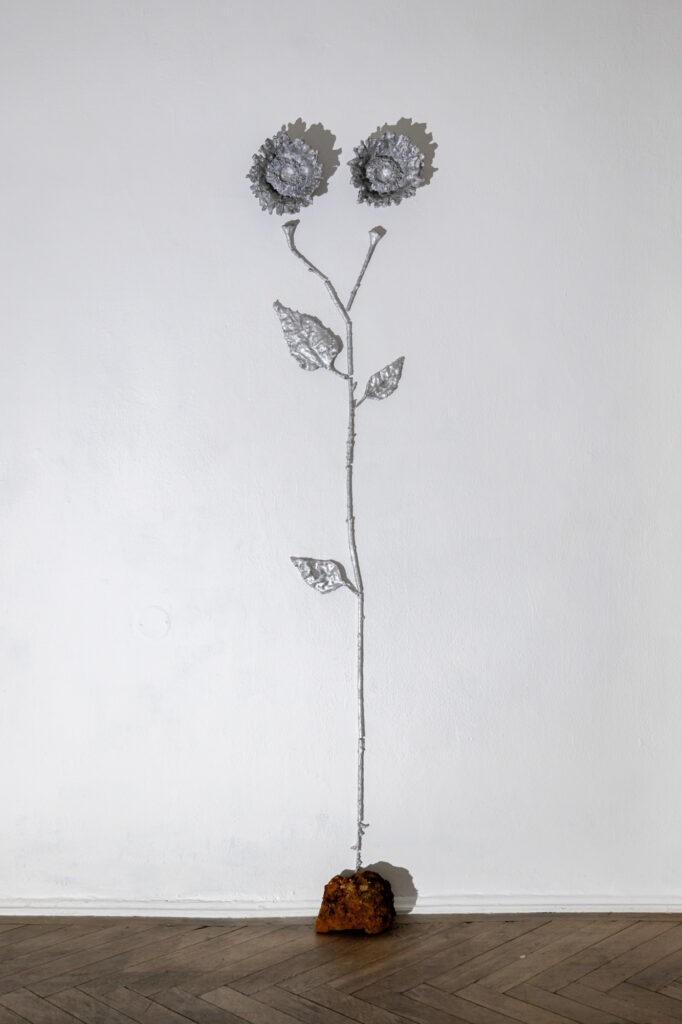
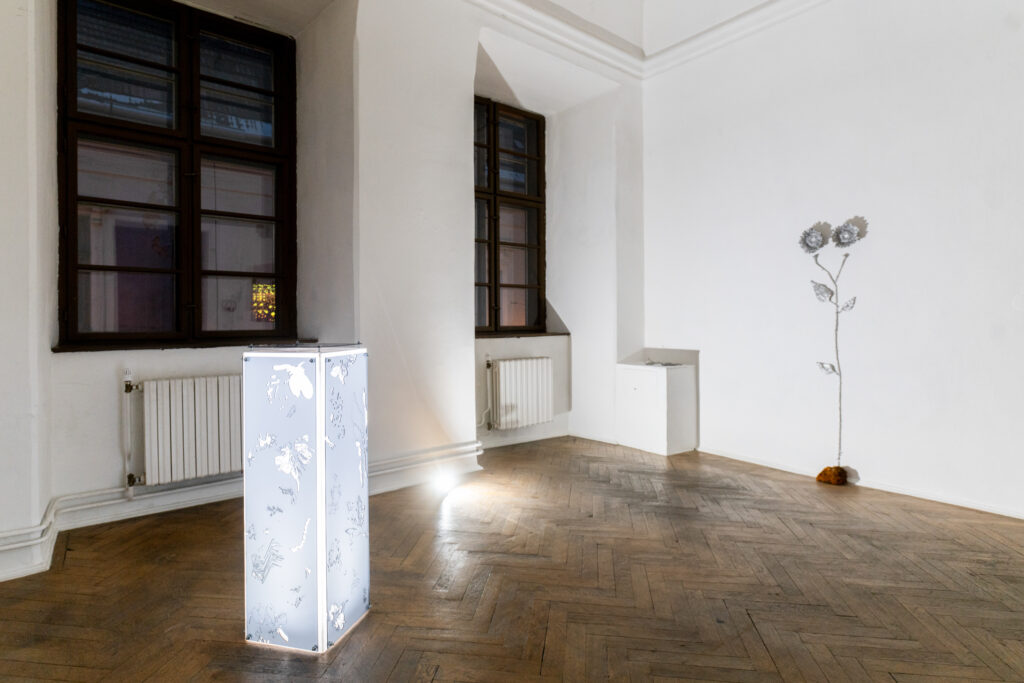
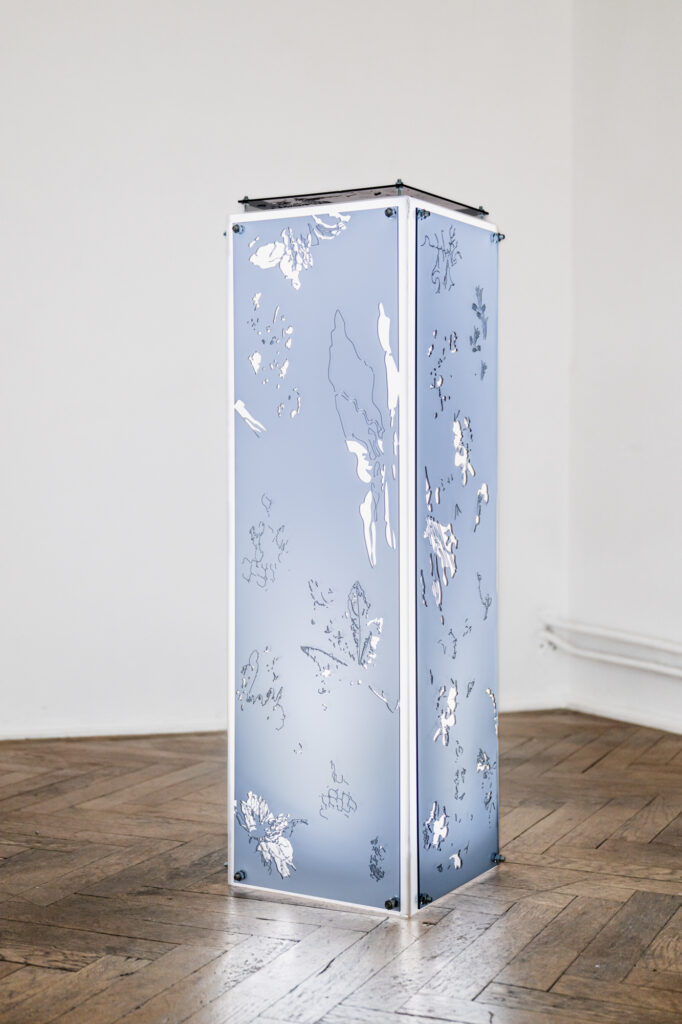
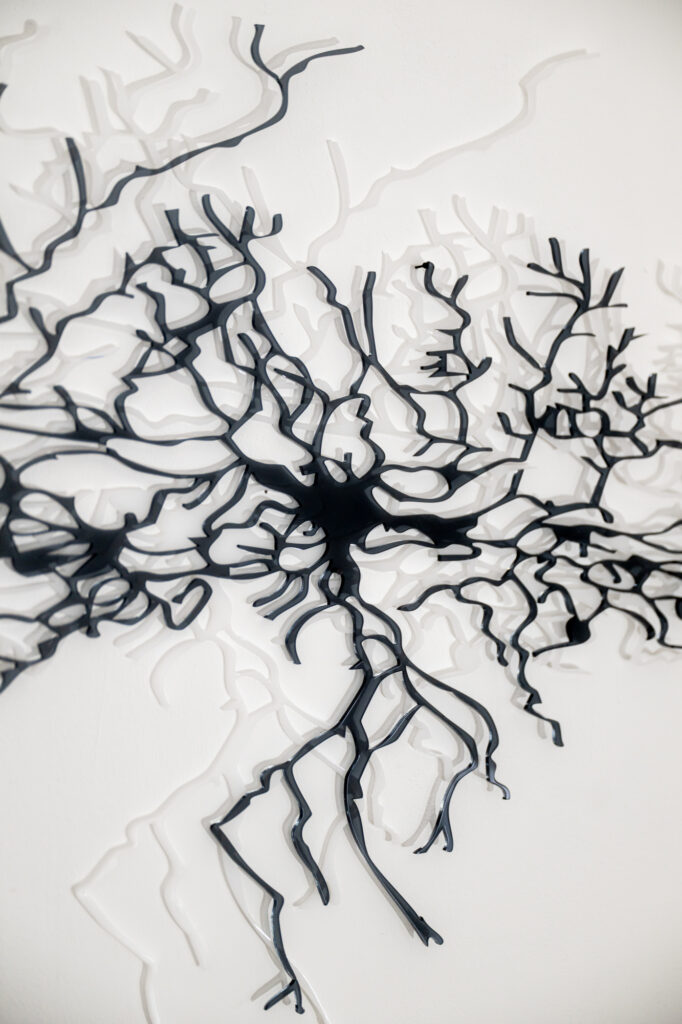
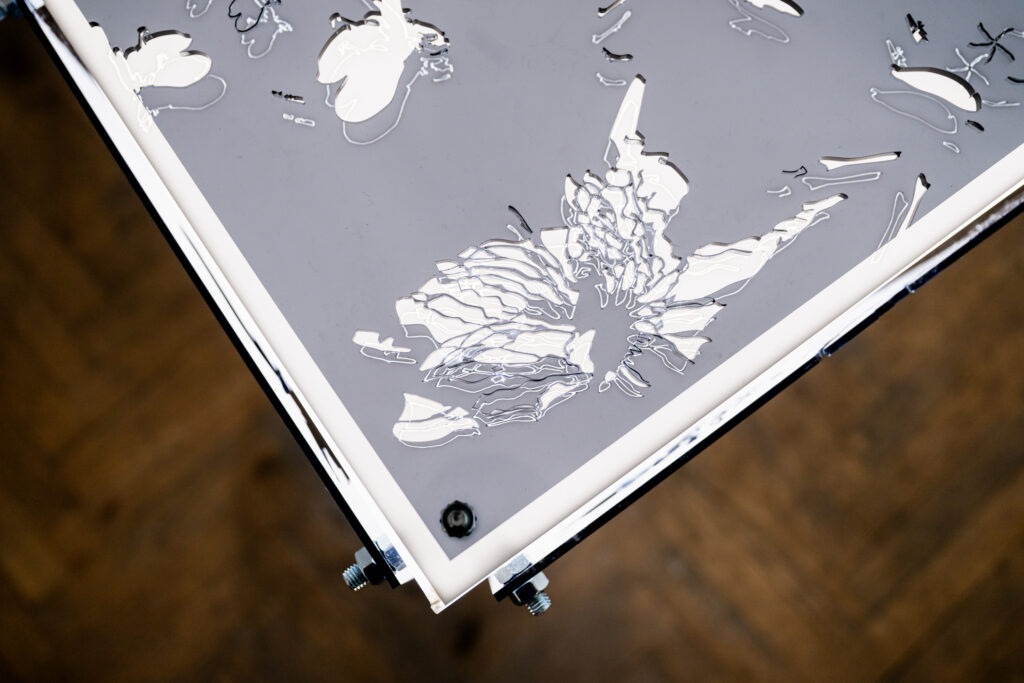
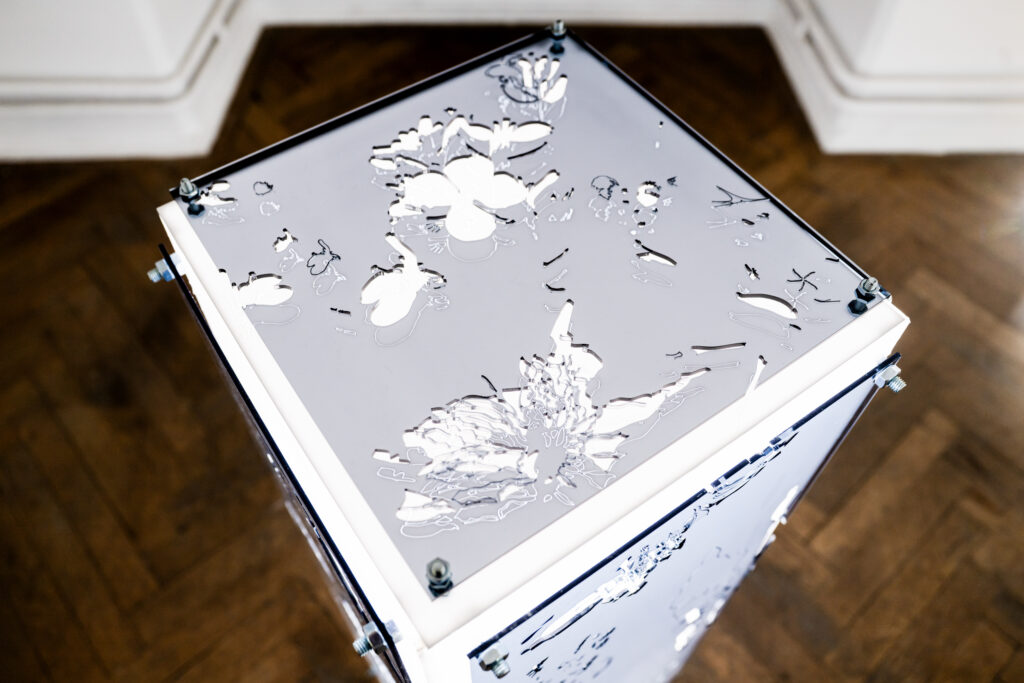
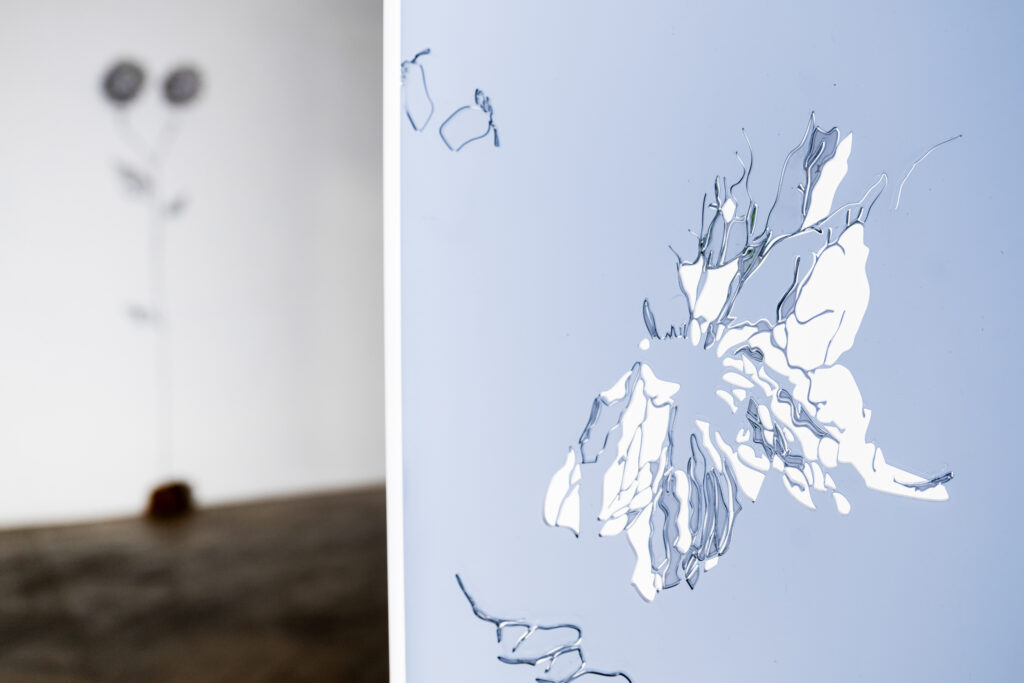
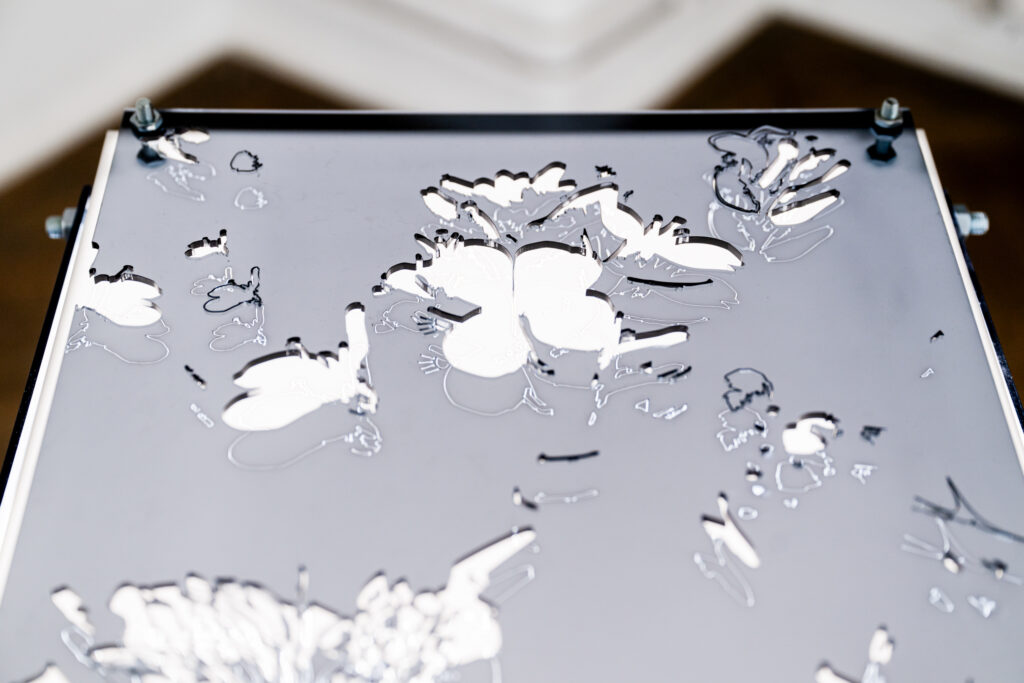
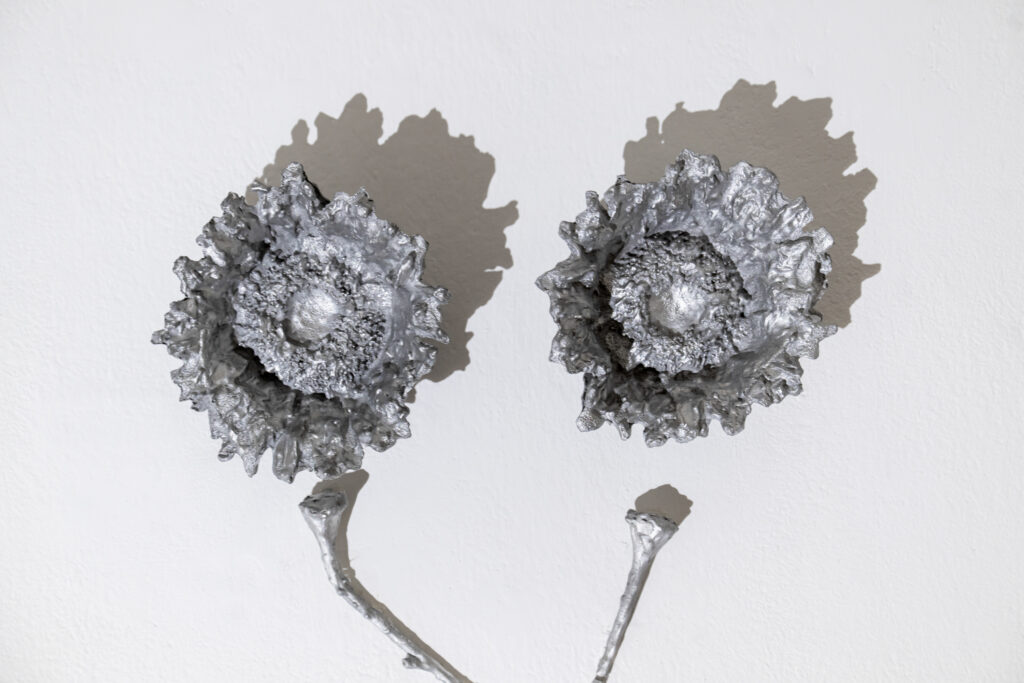
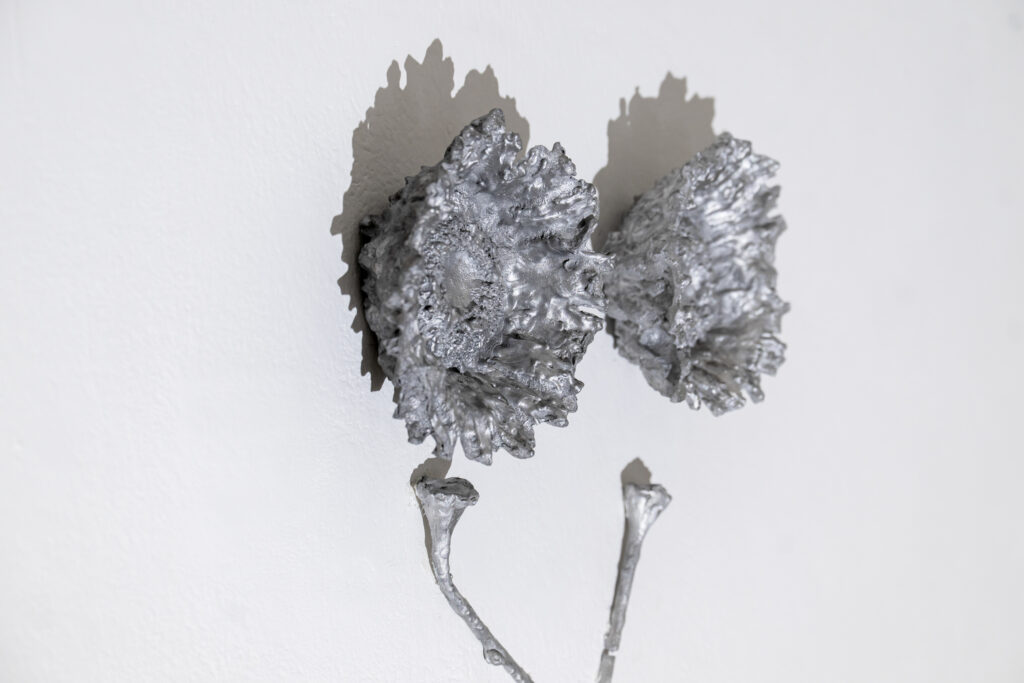
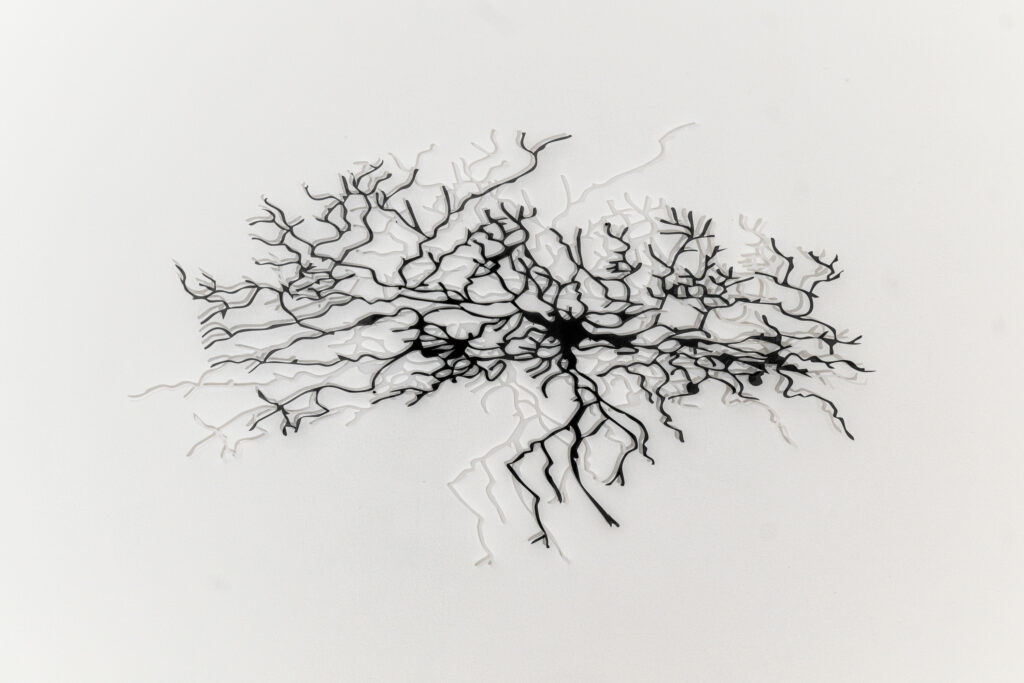
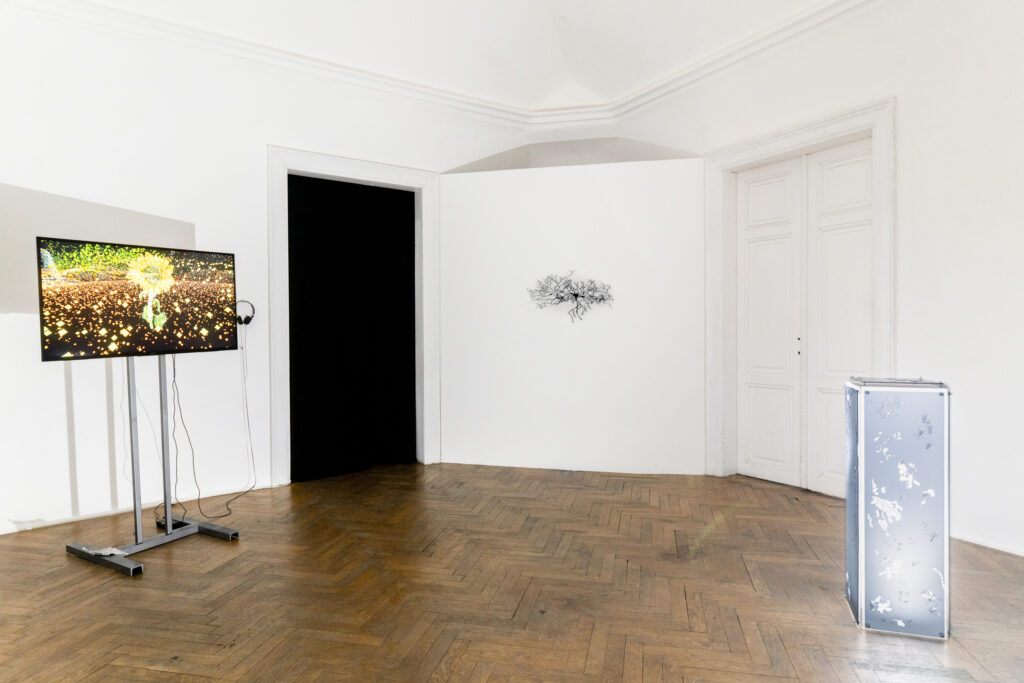
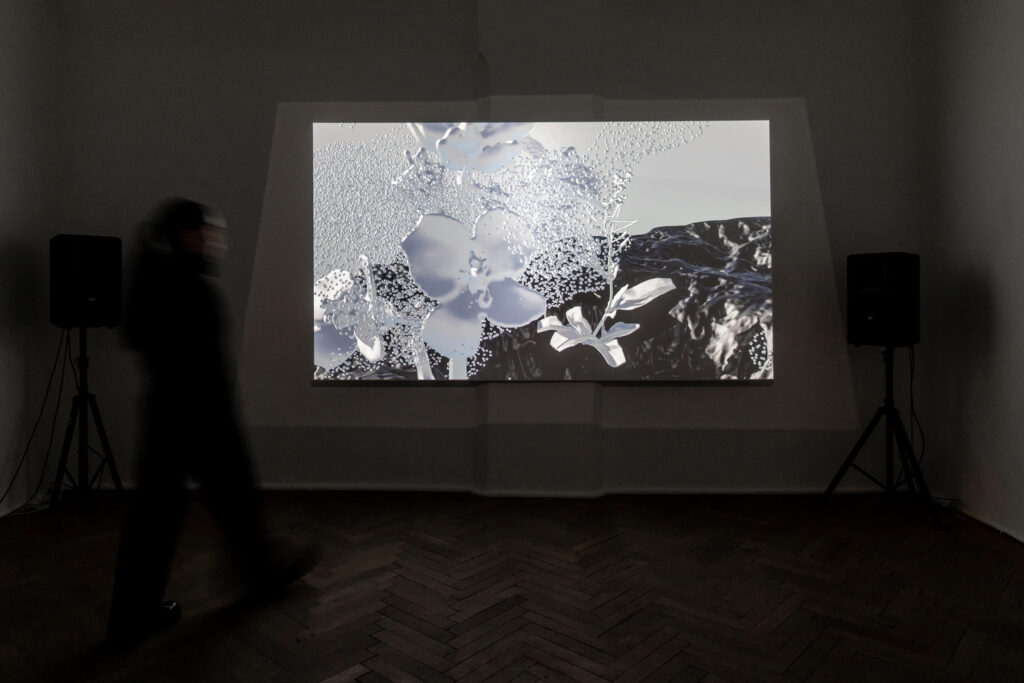
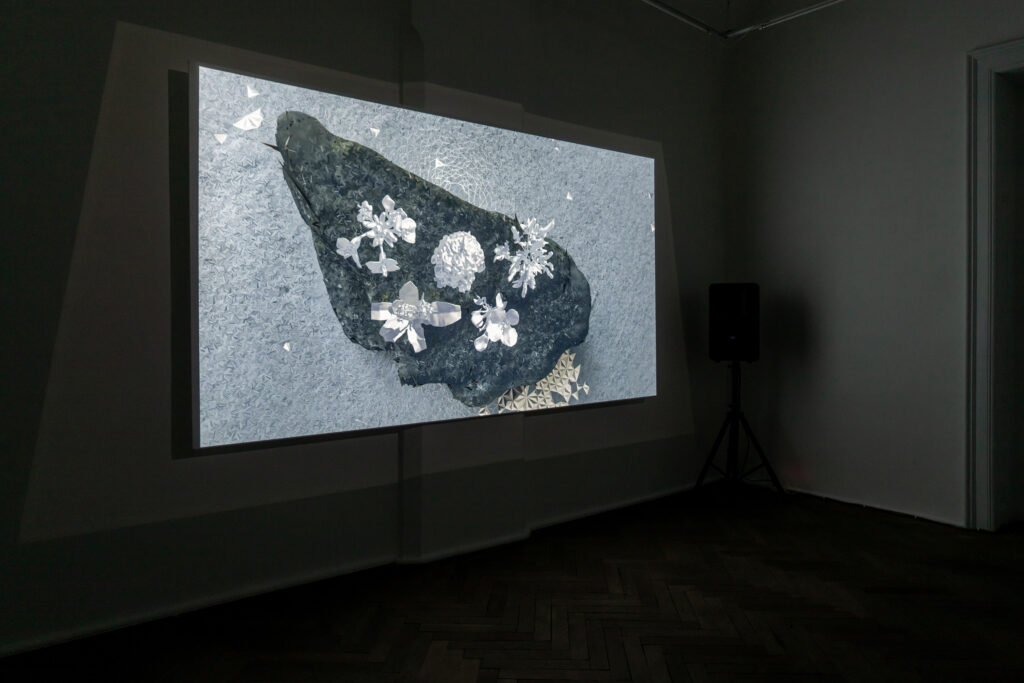
The exhibition works with video installations, spatial sound, and 3D scans of the mining landscape, interwoven with mythology and scientific data. In one of the videos, text appears as a voice without sound – a being without a name that takes many forms. This universal voice is simultaneously inside and outside of us, part of the landscape of our own bodies, yet equally part of a larger landscape – cosmic, mythical, ecological. Among the objects are toxic sediments containing arsenic – a materialization of slow violence, visually present yet untouchable. From them a sunflower grows, a symbol of phytoremediation transformation. The illuminated box is a cartography in which scientific, mythological, and biological elements interconnect to the edge of legibility. A fluvial map created from vectors of Slovak rivers is disassembled and reassembled so that it becomes simultaneously water, venous or root structure – a rhizome**, where the body of the landscape and the bodies of living organisms can no longer be separated.
The exhibition title Counterflow thus designates a flow that resists the logic of extraction. Phytoremediation is a form of counterflow – plants and bacteria create a biological current that absorbs and neutralizes contamination. Counterflow is a project about listening to what lies beyond the threshold of perception, about presence in a landscape shaped by extraction. In what remains wounded.
*Rob Nixon, Slow Violence and the Environmentalism of the Poor (Cambridge: Harvard University Press, 2013). Nixon defines slow violence as gradual destruction that unfolds too slowly to command attention, yet devastating enough to transform ecosystems and lives.
**Rhizome – a concept by Gilles Deleuze and Félix Guattari describing a non-linear, non-hierarchical network of connections without centre or edges, in contrast to a tree structure with roots and branches.
Beáta Kolbašovská is a Slovak new media artist whose work spans site-specific installations, live visuals, performances, and 3D animation. As founder of the visual collective Nano VJs and POMA (Platform of Open Media Art), she focuses on creating and presenting media art in public spaces. She frequently collaborates internationally to produce complex multimedia works. By harnessing ephemeral moments, she forges meaningful interactions between her art and its participants. Each audiovisual installation is meticulously calibrated to resonate with its location’s unique atmosphere. She presents her projects worldwide, inviting deep engagement with her explorations of slowness and environment. She has performed and exhibited in recent years at Athens Digital Art Festival, Athens, GR (2025), Schafhof – European Art Forum Upper Bavaria, Freising, DE (2025), ON SCREEN FESTIVAL, Vienna, AU (2024), 29th Slavonian Biennial, Museum of Fine Arts in Osijek, HR (2024), IDKF, International digital art festival, Stuttgart, DE (2024), Simultan festival, Timisoara, RO (2024), Prototyp festival, Brno, CZ (2024) and others.
Lorena Solís Bravo is a Peruvian artist based in Amsterdam. Their practice merges together scientific research, speculative thought, and poetry, giving shape to films, performances, sculptures, and texts. Through their work, they explore and deconstruct the concept of identity within the modern-colonial subject by examining its symbiotic relationships with other species, proposing a dissolution of the boundaries between the human and the non-human. In these intersections, they invite the viewer to experience the world as a body in constant transformation and interconnection.
Solís Bravo employs a situated and collaborative methodology, frequently collaborating with scientists and biologists. They use technologies such as Micro CT scanner and electron microscopy, combining them with alternative narratives. Their practice stems from a critique of how science has been historically constructed and understood through Western hegemonic thought, aiming to rethink it from a decolonial perspective, opening it up to other ways of knowing and sensing.
Their approach is grounded in rigorous research, which then expands into the poetic, the dreamlike, and the sensorial.
The exhibition is the result of the residency project PhotoSyntéza – One World, One Landscape, which aimed to reflect on the ecological challenges of the eastern Slovakia region through innovative technologies.
The project was realized through the collaboration of CIKE, IMPAKT (NL), KAIR, and Šopa Gallery.
The PhotoSyntéza project was supported by the Dutch Embassy in Slovakia.
The program of this gallery is supported using public funding by the Slovak Arts Council. The Slovak Arts Council is the main partner of this project. The project was also supported by the City of Košice.